Artist Talk: Boris Huang
Join an online talk with exhibiting artist Boris Huang.
Huang moved to Hawaii from his native Taiwan and came to fall in love with the tradition of Hawaiian featherwork: so much so he apprenticed with one of its contemporary masters, Mary Louise Kaleonahenahe Kekuewa. Huang will share some of his techniques and discuss specifics about feathers and his making strategies. This is a rare opportunity to learn about this ancient craft, his contemporary interpretation, and to ask questions!
This talk is presented in conjunction with the Craft in America Center exhibition, Feather Adornments: Boris Huang, on view January 18 through April 26, 2025.
To join online, please register.
Artist Talk: Chris Maynard
Join us for an in-person talk with exhibiting artist Chris Maynard.
Birds were always a part of Maynard’s childhood and he began working with feathers at age 12. Learn about the process Maynard has developed where he intricately carves feathers and arranges them into delicate compositions. His work highlights the patterns and colors of the feathers themselves.
Maynard is featured in the SCIENCE episode of Craft in America’s PBS documentary series.
This talk is presented in conjunction with the Craft in America Center exhibition, Chris Maynard: Soar, on view January 18 through April 26, 2025.
To join online, please register. To join in person, please email rsvp@craftinamerica.org
Artist Talk: Erik and Martin Demaine
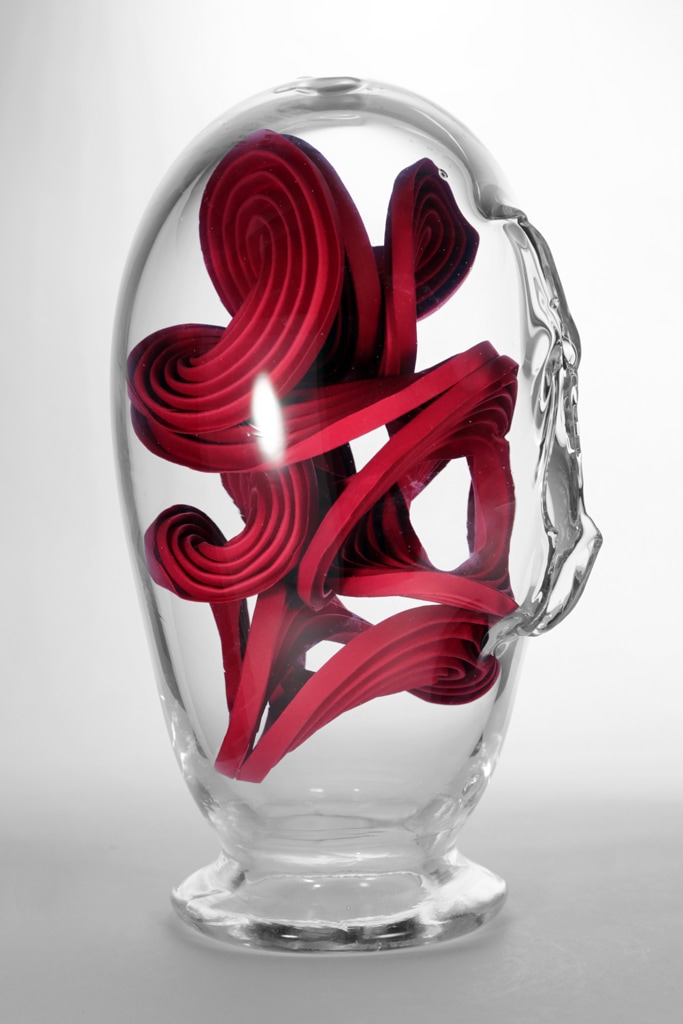
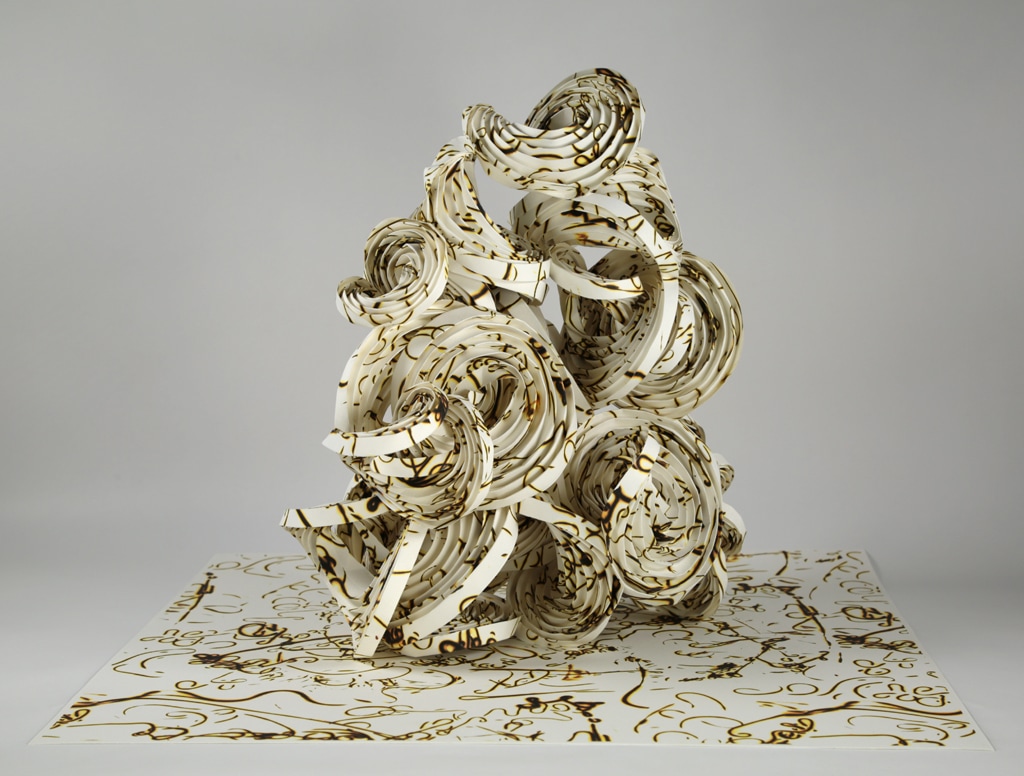
MIT artist-in-residence Martin Demaine and MIT computer science professor Erik Demaine present on their collaborative research and artwork based on folding. The father and son duo explore the principles and possibilities of folded paper for mathematical, scientific, and artistic applications. The Demaines are also featured in the upcoming Craft in America episode, SCIENCE.
This talk is presented in conjunction with the Craft in America Center exhibition, Erik and Martin Demaine: Puzzling with Paper, on view September 14, 2024 to January 4, 2025.
Recorded-talks-and-interviews
,,,,,
Reading Craft: Architectural Pottery
Authors Daniel Chavkin, Jeffrey Head, and Jo Lauria discuss their contributions to their exhibition catalog, Architectural Pottery: Ceramics for a Modern Landscape, the first book to document the history of the groundbreaking company Architectural Pottery, tracing its critical influence on midcentury design and its enduring appeal today.
In 1950, pioneering entrepreneur Rita Lawrence and her husband, Max, founded Architectural Pottery with design partners John Follis and Rex Goode. The cutting-edge ceramic manufacturer received an immediate and enthusiastic reception. Their strikingly minimal ceramics embodied a shift from the ornamental to the essential; the planters became highly coveted in design circles, and appeared in houses by Richard Neutra, John Lautner, and the historic Case Study Houses. Featured in the first of MoMA’s Good Design exhibitions alongside now-iconic designs by Ray and Charles Eames, Alexander Girard, and George Nelson, Architectural Pottery’s refreshingly clean, exceedingly elegant pots and planters were soon ubiquitous in spaces that epitomized modern living.
This talk is presented in conjunction with the American Museum of Ceramic Art exhibition, Architectural Pottery: Ceramics for a Modern Landscape, on view August 17, 2024–March 2, 2025.
Buy the exhibition catalog
Take advantage of 20% off when using the discount code PHAIDON20
About the Authors
Daniel Chavkin is a photographer, collector, and researcher of all things modernist, and the author of Unseen Midcentury
Desert Modern.
Jeffrey Head is a writer specializing in architecture and design, and is author of several books.
Jo Lauria is a Los Angeles-based curator, writer, and educator, as well as coauthor of Master of the Midcentury: The
Architecture of William F. Cody, also published by Monacelli.
Recorded-talks-and-interviews
,,,,,
Artist Talk: Lorraine Bubar
Papercut artist Lorraine Bubar talks about how she was inspired to transition from painting and animation to the long-standing tradition of papercut. As an avid world traveler, Bubar noticed that paper cutting was a global and timeless practice. She felt that it was the perfect outlet to convey the intricate and ordered natural beauty she observed on her travels.
Presented in conjunction with the exhibition, Lorraine Bubar: Papercut Perspectives on view September 14, 2024–January 4, 2025.
Recorded-talks-and-interviews
,,,,,
Artist Talk: Martin Alexander and Lauren Verdugo
On the occasion of the exhibition, Building Blocks: Process & Wood, Los Angeles-based artists Martin Alexander and Lauren Verdugo talk about their work and their shared interests in materiality, reconceptions of functionality, and expressions of identity. Both artists were filmed for the Craft Video Dictionary.
Martin Alexander Hernandez is a multidisciplinary sculptor and woodworker. He graduated from California State University, Long Beach with a BFA in Woodworking in 2018. Shortly after this, he opened his studio practice, Martin Alexander Studio, in Los Angeles, California. Since then, he has produced sculptural work and designed furniture utilizing both his personal studio and wood shops throughout the Los Angeles area. He has also honed his skills by apprenticing under a variety of artists and furniture studios.
Hernandez’s work fuses traditional craft techniques with a conceptual design approach. He is interested in material sustainability, often producing sculptural work with found materials. He currently serves as the shop tech at Allied Woodshop in Los Angeles.
Lauren Verdugo is a Southern California-based artist, woodworker, and furniture designer. Verdugo began their formal training in 2016 by apprenticing with master woodworker Larry White, whom they met through an internship at the Sam and Alfreda Maloof foundation. They went on to complete their BA in Applied Design at San Diego State University in 2021, and are currently enrolled in the Wood MFA program at California State University, Long Beach.
Verdugo’s designs emphasize the unique attributes of their source material, including history, meaning, and physical features. Minimalist forms are punctuated by playful decorative elements. Verdugo rhythmically juxtaposes hard and soft lines, heavy and light features, resulting in works which appear sturdy, yet distinctly energetic. In addition to their multimedia arts practice, they teach wood workshops at the Sam and Alfreda Maloof Foundation in Alta Loma, California and at Allied Woodshop in Los Angeles.
recorded-talks-and-interviews
,,,,,
Artist Talk: Larry White
Woodworking artist Larry White talks about his development with Sam Maloof and his ensuing decades-long practice in both woodworking and art. Learn about his stream-of-consciousness creative process and how his inspiration comes from a wide range of sources.
recorded-talks-and-interviews
,,,,,
Artist Talk: Reuben Foat and Ryan Taber
On the occasion of the exhibition, Building Blocks: Process & Wood, Los Angeles-based artists Reuben Foat and Ryan Taber will talk about their shared interest in reconsidering historic furniture processes and their perspectives on furniture education approaches and opportunities. Both artists were consulted for the Craft Video Dictionary.
Reuben Foat is a furniture designer and sculptor who is recognized for his traditional and technological approach to furniture. Finding inspiration in both old and new approaches to making, Foat creates much of his work using technologies like computer-aided-design and computer-aided-manufacturing.
Foat was raised in Mukwonago, Wisconsin and attended the University of Wisconsin where he received a BS in Art and learned furniture design. Foat then took on several positions as a cabinet maker, furniture restorer, and furniture designer before attending San Diego State University where he received his MFA with a concentration in furniture design and digital fabrication. Foat currently works out of his studio in Long Beach, California, while serving as a professor and chair of the Woodworking Department at Cerritos College.
Ryan Taber is an artist, woodworker, and educator. Since 2015, he has served as head of the Wood program at the School of Art at California State University, Long Beach. The program has continued to evolve under Taber’s leadership, emphasizing sustainability and critical thinking at every step in the creative process.
Taber’s art practice is discursive, drawing on painting, photography, sculpture and furniture making. Each piece utilizes an intricate web of historical references to interrogate notions of art and visual culture. The work considers historical shifts in social perspectives on objecthood and materiality, which is reflected in the CSULB Wood program’s initiative to up cycle wood from nearby dead trees in order to reduce the industrially produced materials used by students. The challenges inherent in working with imperfect, recycled wood encourage Taber’s students to continuously problem solve and maintain an ongoing dialogue with their materials.
recorded-talks-and-interviews
,,,,,
Artist Talk: John Luebtow and Stephen Edwards
On the occasion of the exhibition, Between the Lines, John Luebtow and Stephen Edwards talk about their overlapping early development in Los Angeles, careers as teaching artists, and how they used their experience to build state-of-the-art shops for glassmaking on the West and East coasts.
recorded-talks-and-interviews
,,,,,
Professional Practices Talk with Roberto Benavidez and Calder Kamin
Join artists Roberto Benavidez and Calder Kamin, who were recently featured in Craft in America’s Play episode, as they discuss their respective strategies to promote and build a successful art practice. Their work is also featured in Spirit of Play; Craft and Imagination on view at the Center through March 2, 2024.
This is a perfect opportunity for emerging or mid-career artists to get some tips and inspiration. They will speak about how they built their careers and continue to create opportunities, as well as the pitfalls along the way, and what they learned from hindsight.
Come early to connect with other attendees, meet and greet the artists, and view the exhibition from 6pm on.
Fee: $25
Roberto Benavidez is a figurative sculptor originally from South Texas specializing in the piñata form. After moving to Los Angeles, he rediscovered his passion for the visual arts and studied figure sculpting and bronze casting at Pasadena City College. Benavidez later switched to paper, a more accessible material than bronze, deciding to focus on the piñata technique, a familiar form from childhood. Benavidez plays with underlying themes of race, ephemerality, beauty and sin, layered with his identity as a mixed-race queer artist, with a focus on impeccable craftsmanship.
Calder Kamin, artist, educator and advocate, transforms trash into beautifully crafted creatures and opportunities to inspire others to be creative and courageous about the future. Nature’s endless ability to reuse and adapt motivates her to eliminate waste and reimagine it as art. Kamin’s creative reuse art projects and public workshops have traveled to museums across the states including the Crystal Bridges Museum of American Art American, the American Museum of Natural History, the Contemporary Austin, Houston Center for Contemporary Craft, and the Amon Carter Museum of American Art. She was the Utah Museum of Contemporary Art’s Art Truck Artist, and artist-in-residence at BreckCreate, Landmark Apartments, the Currier Museum of Art, SiNaCa Studios, Camp Stomping Ground, and the DoSeum, San Antonio’s Children’s Museum. Kamin is a board member of Austin Creative Reuse, a non-profit that diverts community waste to artists, crafters, and educators as resources.
Before committing to her art full-time, Kamin advised artists on career development through positions at the Kansas City Art Institute, City of Austin, and the University of Texas. The City of Austin continues to offer a 6-week course that builds local artists’ knowledge of City resources, networking and business skills that was created by Kamin.